
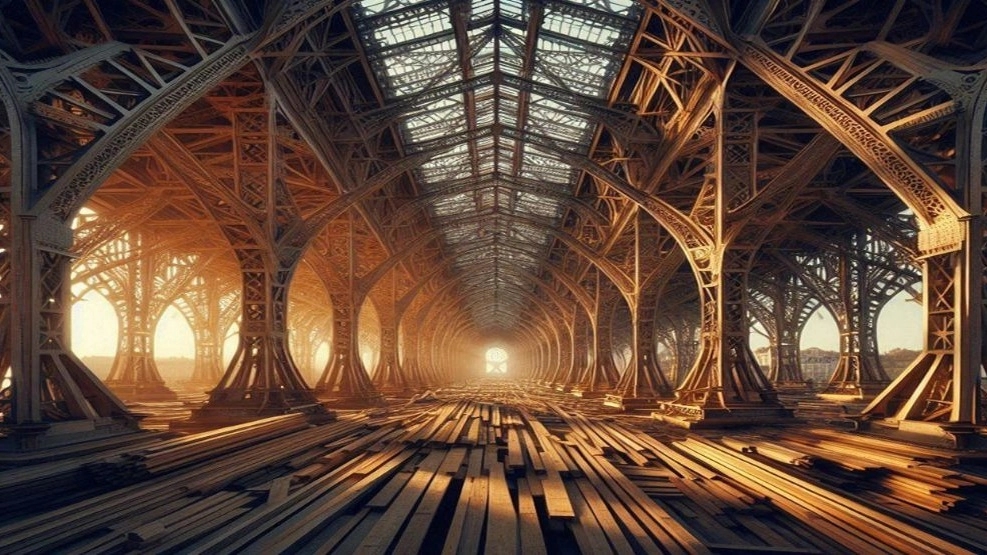
What is the truss?
Steel structure members are exposed to axial forces and usually have more efficiency than flexible members; Because their cross section is almost uniform. Trusses consist of various members that have a main axis and are usually used to provide resistance to external loads. They are also often used to cover large openings. As you know, compared to other systems, truss systems consume relatively less materials and less labor is needed to build them, therefore, trusses are completely suitable and efficient in the field of building space structures.
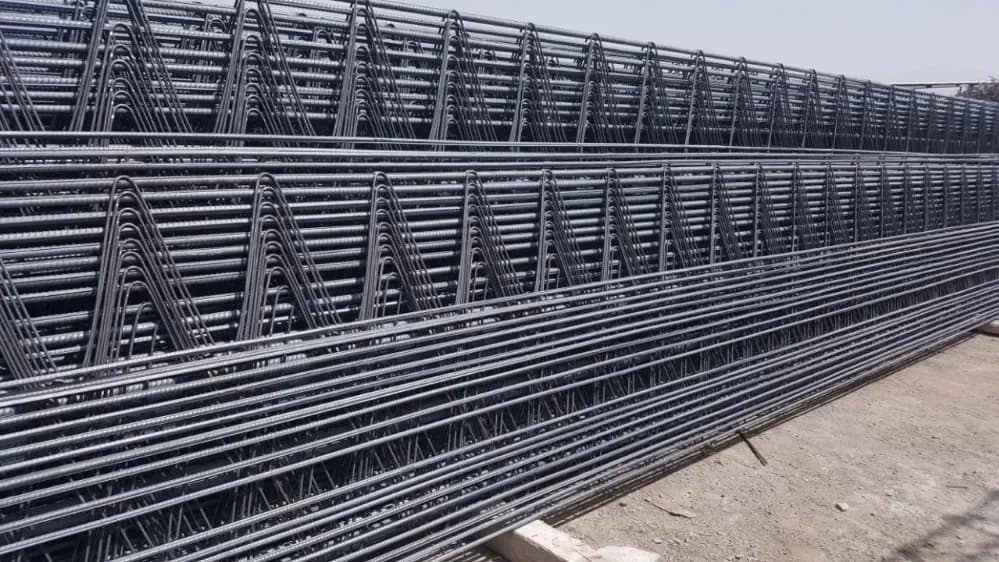
What is the use of truss?
Trafters are used in different parts, among which we can refer to the roof of one-story industrial buildings, high ceilings, and the roof of multi-story buildings. Trusses are used in the said sections with the purpose of creating strength against gravity loads. It goes without saying that trusses are used in other parts with the purpose of creating resistance against lateral loads and creating lateral stability. These parts include buildings, multi-story walls, long horizontal beams of industrial buildings.
Usually, the trusses perform the king's action in transferring the heavy load from the larger opening, which is also called mesh. Also, mesh belts are usually more natural and lighter than normal belts, and because of this, the price of the truss is quite economical. These networks are used as a floor support system in multi-story buildings. By doing this, the depth of all mesh openings in the trusses can be easily adjusted without increasing the depth of the roof. Steel trusses are also usually used in buildings and bridges.
Which trustees are the task of tolerating?
The forces applied to the trusses are not the same and differ from each other in different structures. The load on the truss depends on how the truss is used. Sometimes the load applied to the structure may be static and sometimes it may be variable.
Industrial Structures
The load applied to the truss in industrial buildings is in two forms, dead load and live load. Dead load and live load are two physical characteristics that are used in engineering and other sciences. The amount of live load is a variable that is applied to a structure and changes over time; But the dead load is a fixed amount that enters the structure.
1) dead load
The dead load on the roof trusses of industrial buildings includes the dead load of the covers, the dead load of the poles, the weight of the truss itself, and the weight of the fasteners. Air conditioning ducts and ventilator weight may be added to roof truss dead loads. With the increase of the specified span length, the torque force that resists the suspended frame also increases greatly. In such cases, the use of roof trusses is more economical.
2) Live load
Live load in roof trusses includes gravity weight due to servicing, users passing by, moving furniture. Live load intensity is according to IS: 875-1987 standard. Also, additional special loads such as snow loads in very cold weather, crane live loads in trusses should also be included in special cases.
3) Wind force
Wind force in roof trusses, due to the effects of wind, will usually create an upward lifting force perpendicular to the roof, unless the roof has a large slope. For this reason, the force of the wind in the dog truss acts against the gravity load and sometimes it can be greater than the gravity loads and cause the force and members of the truss to return. The horizontal and vertical girders in the buildings of one or more floors are also considered as trusses. These straps are used to provide resistance to wind and other side loads. Also, due to the increase of gravity in industrial buildings, these braces reduce the bending between different frames. In addition, they support the columns in different buildings and thus increase the bending strength.
4) The load caused by the earthquake
Obviously, the earthquake load in a building directly depends on the weight of the building. Earthquake loads are usually not considered in the design of industrial style steel buildings, and mostly the force caused by the wind prevails. But the earthquake load governs the design of industrial buildings that bear a lot of weight on the roof. These loads have been calculated according to the IS standard.
Multi -storey buildings
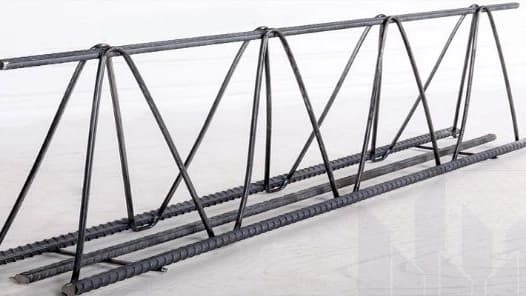
Types of truss
Trusses are engineering structures, which easily bear the load caused by the weight of the building and reduce the dead load of the building. Truss installation is very important because these sections must be installed in such a way that they can withstand the load on the structure well and ensure the safety of the structure. Trusses are easy to build, reduce costs and increase the safety of the structure.